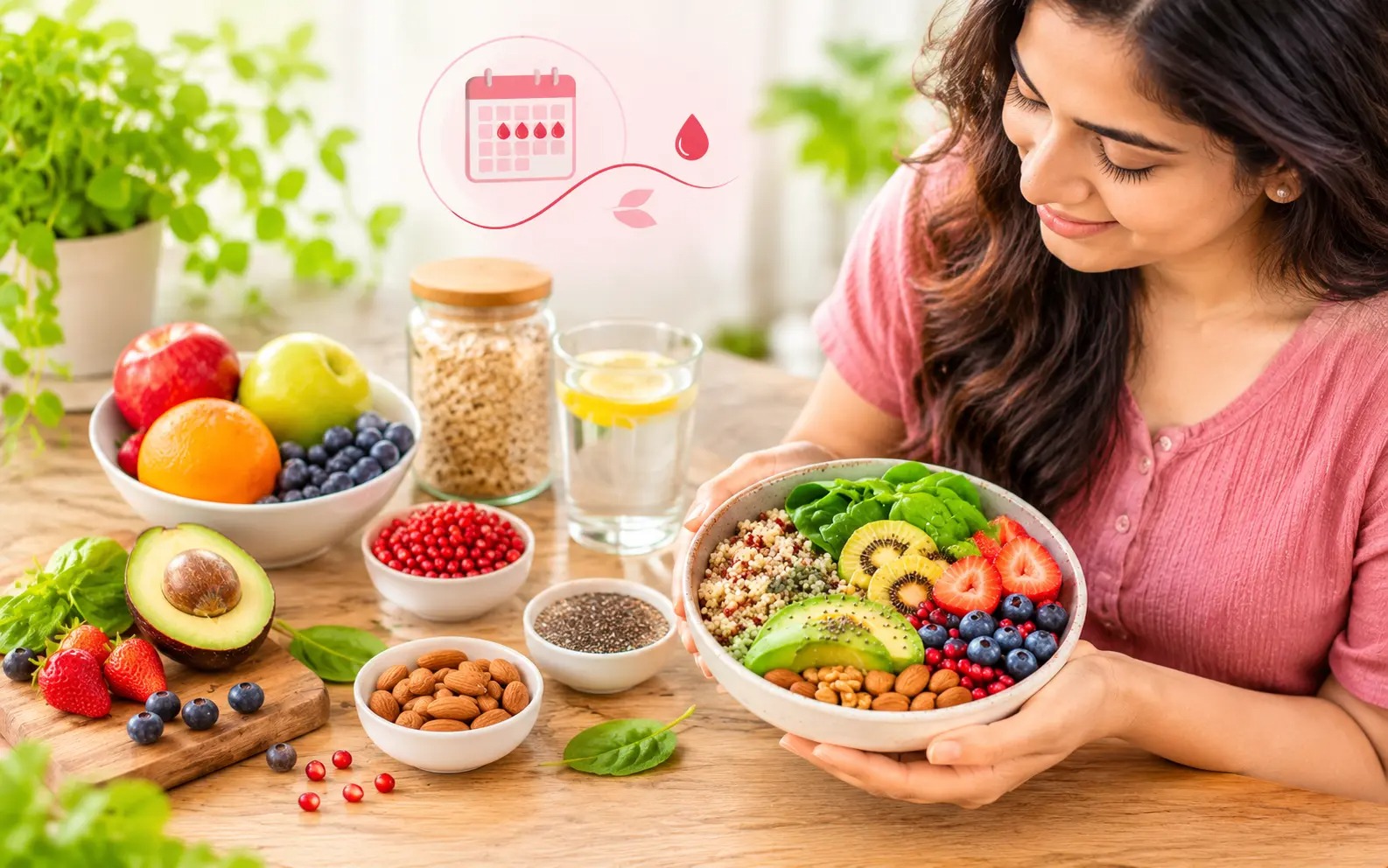
Periods don’t work the same way for every woman. Some have periods at fairly regular intervals, while others notice frequent delays, missed periods or changes in flow. One odd cycle is usually nothing to worry about, but if it keeps happening, it’s worth looking into. Hormones, health conditions, stress and daily habits can all affect your cycle. So can food, because your body needs enough energy and nutrients to keep its hormones working normally. Knowing what to eat, and how to eat, can help you look after your periods and your overall health.
Common Causes of Irregular Periods in Women
Irregular periods can have many causes, and food is only one of them. Here are some common ones:
PMOS (formerly PCOS): This condition affects hormones and how the body handles sugar. It can make periods rare or hard to predict. Many women with it also have insulin resistance, which means the body doesn’t respond well to insulin.
Thyroid problems: An underactive or overactive thyroid can both throw off your cycle.
Sudden weight changes: Gaining or losing a lot of weight quickly can upset the hormones that control your periods.
Stress and poor sleep: Long-term stress and too little sleep can disturb the hormone signals that release an egg each month.
Too much exercise or too little food: If you don’t eat enough for the energy you use, your periods can become irregular.
Life stage: Irregular cycles are common in the first few years after periods start, and in the years before menopause.
Pregnancy, some medicines and other health problems can also cause missed or irregular periods. So don’t assume poor eating is always the reason.
How Nutrition Influences Menstrual and Hormonal Health
Your body needs enough energy and a mix of nutrients to keep its hormones working properly. If you eat too little for a long time, skip meals or follow strict diets, the signals that control ovulation can get disturbed. In some women, going without enough energy for too long can stop periods altogether.
A good balance of carbohydrates, protein and healthy fats covers your body’s needs. Carbohydrates give you energy. Protein helps repair and maintain muscle and other tissue. Fats supply essential fatty acids and help the body make hormones.
Food matters for women with PMOS too, especially if they have insulin resistance. Meals with fibre, protein and less processed carbohydrates can help the body manage sugar better. Still, no single diet has been proven best for regulating periods. Habits you can keep up do more good than short-term restrictions.
Best Foods to Include in a Diet for Menstrual Health
A varied diet helps you get what your body needs and supports your reproductive health. When planning a diet for irregular periods, include foods from different groups. Don’t rely on a few foods that are said to “regulate” periods.
Iron-Rich Foods
Iron helps make haemoglobin, the part of the blood that carries oxygen. Women with heavy periods are more likely to run low on iron. Good choices include spinach, lentils, chickpeas, beans, pumpkin seeds and iron-fortified cereals. Eat plant sources of iron with vitamin C-rich foods such as oranges, amla or tomatoes, because vitamin C helps your body absorb the iron.
Fibre-Rich Foods
Oats, whole grains, fruit, vegetables and lentils or beans all give you fibre. Fibre helps digestion and keeps your bowels regular. It also keeps your energy steady and makes meals more filling, which is useful for women managing insulin resistance.
Healthy Fats
Walnuts, almonds, flaxseeds, chia seeds and oily fish such as sardines and salmon all provide healthy fats. Oily fish are especially good sources of omega-3 fats. Eating these regularly helps meet your body’s need for essential fats and supports your heart and general health.
Protein-Rich Foods
Eggs, milk, curd, paneer, tofu, pulses, fish and lean meat are good sources of protein. Protein helps maintain muscle, repair tissue and keep the body working well. Including some in every meal also helps you feel full and balances meals that have a lot of carbohydrates.
Vitamin and Mineral-Rich Foods
Vitamins and minerals help your body work normally. Citrus fruits and berries give you vitamin C. Leafy vegetables supply folate and magnesium. Dairy products and fortified alternatives provide calcium and vitamin D, and nuts and seeds add magnesium and zinc.
No single food can fix a hormone problem or guarantee regular periods. Eating a wide range of nutritious foods, day after day, works better.
Dietary Habits That May Support Better Menstrual Health
What you choose matters, and so does how you eat. Small, steady changes can support your general and reproductive health.
Eat regular meals: Try not to skip breakfast, lunch or dinner often, especially if your days are busy.
Avoid crash diets: Cutting calories sharply can affect your hormones and your periods.
Limit added sugar: Cut back on sugary drinks, sweets and highly processed snacks.
Include protein and fibre: Combine vegetables, whole grains, pulses and a protein source in your meals.
Stay hydrated: Drink enough water throughout the day.
Avoid unnecessary food restrictions: Avoid a food only if there is a medical reason or you know it doesn’t suit you.
Lifestyle Changes That Complement Healthy Eating
Good food works best alongside healthy daily habits. Regular, moderate activity such as walking, swimming or yoga is good for your heart and general health. Women with PMOS may also find regular exercise helpful as part of their overall care.
Enough sleep on a regular schedule helps your hormones work normally. Stress-relief habits like meditation, deep breathing and relaxation can also help.
It’s worth keeping track of your period dates, how heavy the bleeding is and any other symptoms. A record like this shows changes over time, and it’s useful when you talk to a doctor.
When Should Women Seek Medical Advice?
An occasional change in timing may not be serious, but some signs shouldn’t be ignored. See a gynaecologist if:
- Your periods suddenly become irregular after being regular.
- You miss periods for three months in a row.
- Your bleeding is unusually heavy or lasts longer than seven days.
- Irregular periods come with unexplained weight changes, excess facial hair or unusual tiredness.
- You are finding it hard to get pregnant.
If you could be pregnant, take a pregnancy test when you miss a period. Severe pelvic pain, dizziness or very heavy bleeding needs medical help quickly.
Changing your diet alone may not fix problems like PMOS or thyroid disorders. A proper medical check can find the cause and decide on the right treatment. A registered nutrition professional can add dietary guidance alongside your medical care.
Building Healthy Eating Habits for Menstrual Wellness
Irregular periods can have many causes, and better food is just one part of looking after your cycle. Balanced meals, no extreme diets and healthy daily habits all support your body. Food can’t replace a medical check-up, though. With the right guidance, women can understand what their bodies need and make realistic changes that support their health. Personalised guidance from a nutritionist for women can help you build eating habits you can keep up, based on your own health concerns and nutritional needs.