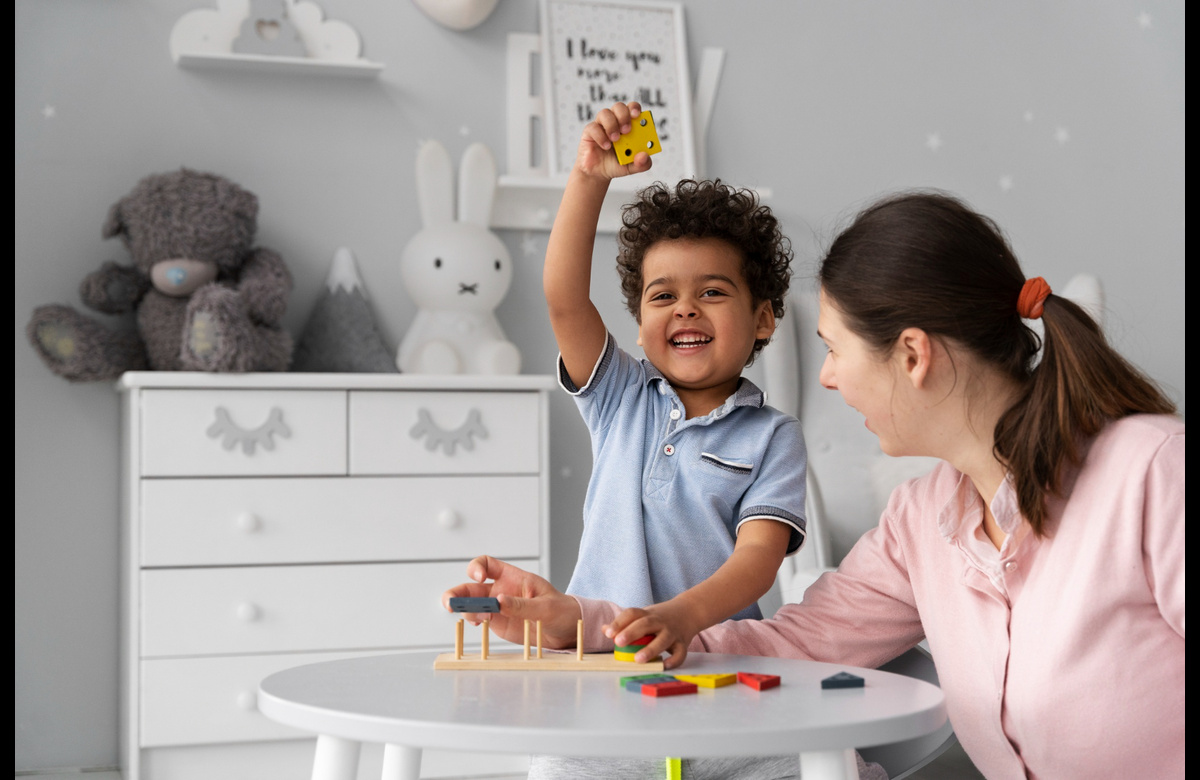
From the very first day of life, a child’s brain is naturally wired to take in language, soaking up sounds, patterns, and meaning from everything around them. As a parent, you are not just a caregiver; you are your child’s very first teacher. The first three years move so fast, and those little moments at home are exactly where their language skills start to develop.
It’s natural for parents to feel concerned when their child continues to rely on crying more rather than words to express themselves. While crying is the first language for infants, as children mature, healthy development involves a change from tears to purposeful gestures, vocalisations, and eventually, clear speech. Your time, responsiveness, and the way you interact with your child are the most effective tools for encouraging communication skills.
Delay vs. Disorder: Understanding the Difference
Before understanding how to do speech therapy at home, it’s important to get a clearer picture of what could be affecting your child’s communication development.
Speech and Language Delay
This typically refers to a slower pace of development. Your child is progressing along the usual language-learning pathway, but reaching milestones later than other children their age. While learning may take more time, steady improvement is still visible.
Speech and Language Disorder
In this case of speech and language disorder, challenges are more persistent and may affect multiple aspects of communication, such as framing sentences, building vocabulary, understanding instructions, or using language appropriately in social situations.
If your child is considered a “late talker,” it doesn’t necessarily indicate a disorder. Many children simply need more time. However, if you notice limited improvement even with regular encouragement and interaction, consulting a speech-language pathologist (SLP) can be a wise and proactive decision. Early guidance often leads to stronger long-term progress.
15 Proven Activities for Speech Therapy at Home
Successful speech therapy for kids at home begins with building a language-filled environment. Children develop communication skills through meaningful interaction and everyday experiences. Below are 15 practical and easy-to-implement strategies to help strengthen your child’s speech and language development.
- The Art of Strategic Sabotage
“Sabotaging” your child’s environment is a classic therapy trick. Place favourite snacks or toys in clear containers that are just out of reach. When your child sees that they cannot access what they want, they will be motivated to ask for help. This creates a natural “communication gap” that encourages them to use words or gestures to ask for assistance.
- Narrate Your World with Parallel Talk
Parallel talk means acting as a sportscaster for your child’s life. As you go about your day, whether you’re cooking, cleaning, or playing, talk through what you are doing- talk through your daily chores to turn every moment into a lesson. For example, you might say, “I am cutting the apple. Look, the apple is red. Now, I am putting the apple in the bowl.” By labelling the world, you provide a continuous flow of vocabulary.
- Expand Their Words
If your child points to a cookie and says “cookie,” don’t just hand it to them. Use the “Expansion” technique. Say, “Oh, you want a big cookie?” By adding one or two words to their statement, you help them move from single-word requests to phrases.
- Provide Meaningful Choices
Instead of asking yes/no questions, offer choices. Ask, “Would you like to play with the red car or the blue blocks?” This encourages your child to use language to communicate a preference rather than just nodding. It also helps reduce frustration.
- Use Visual Aids
Toddlers often struggle with the abstract nature of time. Visual schedules that use simple pictures to show the day’s activities help children understand what comes next. You can also use a family photo album to label relatives, pets, and friends.
- The Power of Expectant Waiting
We often rush to answer for our children because we know them well. However, this limits their chances to speak. When you engage in an activity, like blowing bubbles, suddenly stop. Look at your child with an expectant expression and wait. That silence builds anticipation and encourages your child to fill the gap with a sound or word.
- Make Sign Language a Bridge
A common myth is that teaching sign language prevents a child from speaking. In fact, it provides a bridge. If a child is frustrated because they cannot say “more,” teaching the sign gives them an immediate way to ease that frustration, keeping them calm and willing to try speaking.
- Read with Purpose
Reading is about interaction. Choose books with bright pictures. Instead of reading straight through, stop and ask questions. Leave out words that are easy to guess, like animal sounds (e.g., “The cow says…”), and let your child fill in the blanks.
- Sing and Dance
Music is a universal language. Nursery rhymes have a rhythm and repetition that are easy to remember. When singing, leave phrases open for your child to finish. If you start singing, “The wheels on the bus go round and…”, pause and give them a moment to join in with “round.”
- Get Silly
Children are attracted to exaggerated expressions and silly sounds. Use these moments to make animal noises, honk like a car, or make funny faces in the mirror. Being silly lowers the pressure and makes them more likely to try their own vocalisations.
- Remove Distractions
Quality over quantity matters. When playing, turn off the TV and put your phone away. Fifteen minutes of focused attention is more valuable than an hour of distracted play.
- Use the Contingency Technique
Help your child understand that communication has rewards. Link fun activities to small tasks: “Once you tell me ‘more,’ we can push the swing again.” This shows them that their voice has power.
- Specific Positive Reinforcement
Instead of giving a generic “good job,” be specific. Say, “I love how you made the ‘b’ sound for the ball!” This acknowledges their effort and helps them understand exactly what skill they are mastering.
- Keep Practice Short
Young children have short attention spans. Aim for 10-15 minutes of practice instead of long sessions. Stop before your child becomes frustrated to make sure they associate speech practice with joy.
- Involve the Whole Village
Communication doesn’t happen in isolation. Let siblings and grandparents in on these strategies. If everyone models simple language, your child will be surrounded by consistent opportunities to learn.
When to Seek Professional Support
While these methods can be helpful for normal development or minor speech concerns, they may not be enough in every situation. If your instincts tell you your child is having ongoing difficulty or you notice regression in their skills, seeking professional guidance is strongly recommended.
If you have concerns about your child’s communication development, visiting a speech therapy centre can help. A speech-language pathologist can guide you through the process. By developing a customised learning path, an SLP removes uncertainty, pinpoints specific challenges, and provides targeted techniques you can confidently use at home.
Improve Your Child’s Speech
Hope you got some interesting simple activities mothers can do at home to improve their kids’ speech. Helping your child develop speech can feel challenging, but it’s important to remember that no one has a greater impact than you. Active parental involvement is the strongest factor in successful speech development. Everyday routines such as bath time, mealtimes, or quick errands offer natural chances to practice communication. By gently and regularly using these techniques, you’re doing more than teaching speech skills; you’re nurturing connection and confidence that will last well beyond childhood.
Keep showing up, keep it playful, and keep the connection strong. With your support, your child’s voice will continue to grow and find its place in the world.